Why Warehouse Steps Matter
Posted on May 18th 2026 by Hannah Clark.

It is No Falls Week 2026. And to honour this, we are looking into the importance of adding Warehouse Steps to your set-up.
Falling from height is the number one cause of workplace fatalities in the UK, according to HSE. It was accountable for 35 people losing their lives in the UK in 2024/25. It is more important than ever to ensure safe working practices are available and taught in the workplace.
No Falls Week is dedicated to promoting safe workplace habits. Set up in 2024, it reminds organisations that incidents can be easily prevented when the correct measures are put into place.
The importance of creating a safe working environment
🪜 Employees feel safe and confident whilst working
📈 Improvement in workplace productivity
🚑 Less risk of workplace accidents, including strains and long-term diseases
✉️ Reduced staff turnover due to unsafe working conditions
💰 Save money in the long term from potential lawsuits
🪦 Stop workplace fatalities from happening
5 Common Warehouse Safety Mistakes
1. Using the incorrect access equipment
Access equipment is a great asset in workplaces where stock, tools, and other resources may be kept at height. However, many injuries can occur when people try to reach these items in a quick and unsafe manner. This can include climbing onto the shelving itself, furniture, or using the incorrect ladder type.
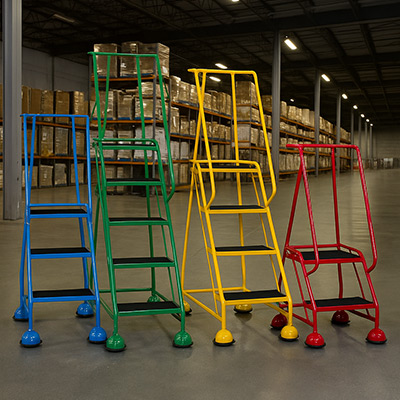
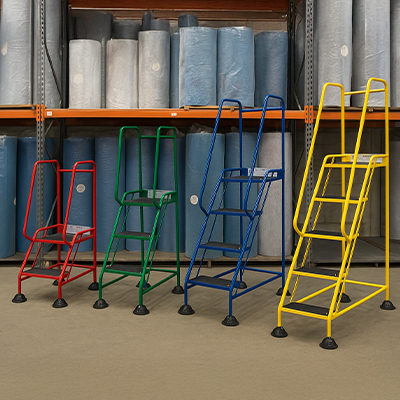
To prevent these accidents from escalating, adding an appropriate warehouse ladder may be ideal. They provide a fixed, permanent climbing solution that workers can easily transport around the workplace. Our range of mobile warehouse steps is fully welded together, creating a stable platform for reaching items. Plus, with a range of tread options available, you can help prevent workplace strains and boost ergonomics.
Our TUFF Easy Glide Steps are perfect for a variety of heavy-duty industrial warehouses. With anti-slip treads added as standard, these steps are ideal for stopping users from falling off the ladders, even when wearing bulky work boots. Retractable castors are covered with a rubber dome when weight is applied, stabilising them whilst they are in use. Plus, with 30% off the range, they are a cost-effective solution for all businesses to adopt.
When purchasing your warehouse ladders on wheels, ensure they cater for the maximum working height your workplace requires. This can be checked by seeing our specifications that specify the height of the top platform and then adding your height on top. This can ensure your workers can reach storage spaces without the need to strain.
2. Poor housekeeping around the warehouse
When working in busy warehouse environments, placing items down in temporary locations may seem like a quick option. It also can seem convenient to leave hazards such as spills or shrink wrap on the floor to tidy up later, or by designated cleaners. However, these obstructions can become risks within the workplace if these housekeeping standards slip.
Slips and trips can cost employers £500m per year on average (HSE). These costs cover injuries, production delays, and re-employment if injuries are significant. Therefore, training employees to remove this clutter and improve their aisle management is highly important.
3. Developing unsafe habits
Warehouses are recognised as being fast-paced environments, where stock is constantly being moved and relocated. This need for speed can lead staff to use their own shortcuts. This can range from overloading handling equipment, not wearing the correct PPE, or improvising access solutions to reach boxes stored at a height.
These shortcuts can easily become normalised within the workplace. Whilst they may save time on a temporary basis, the consequences of these shortcuts backfiring can cause permanent injuries and even fatalities. As a result, it is crucial to remind workers of correct working etiquette.
4. Failing to inspect equipment regularly
Whilst investing in brand new warehouse steps can help to prevent falls initially, it is important to keep on top of their maintenance.
Regularly checking your warehouse steps is a key part of No Falls Week. Not only does this ensure their quality remains high and protective, but organisations can help prevent workplace accidents from happening immediately. Should something not look right with your warehouse safety ladder, ensure these issues are corrected immediately.
In busy warehouse environments, frequent visual checks and scheduled inspections can spot wear, damage, or stability issues early. Points to look out for include:
- Are anti-slip surfaces still effective?
- Are handrails secure and stable?
- Do wheels and brakes lock properly?
- Are the wheels stable or require replacing?
- Are there signs of structural damage or corrosion?
- Are weight limits still clearly visible?
- Is the equipment clean and free from debris?

5. Focusing on warehouse speed, not safety
Mobile warehouse steps work best when they form part of the workflow design. This way, they can prevent being a catalyst for further accidents. Especially in smaller stock rooms, it is easy to create narrower aisles with overstocked shelving to maximise vertical storage space.
It is therefore important that warehouses are designed in a format that reduces unsafe movement. This includes installing proper lighting, high-quality industrial shelving, and readable shelving labels and identification for minimal confusion.
Training should also be completed on how best to stock shelves to prevent further accidents. This includes ensuring all heavy goods are stored on lower shelves, with lighter items further up. This not only prevents shelving from toppling due to imbalance, but also reduces the risk of workers falling while moving heavy stock down multiple steps.
Why EN Certified Steps can offer additional peace of mind 🎖️
The right solution often depends on the operational demands of the warehouse itself. Whilst not every warehouse environment requires the same specification of equipment, EN-certified aluminium steps can offer additional reassurance for businesses operating in fast-paced or high-frequency picking environments.
Our range of mobile safety steps includes a variety of Climb-It EN 131 Certified Steps, including their Mobile Steps with Gate. This European safety standard for ladders and access equipment tests the strength, stability, durability, and slip-resistance of each ladder. As a result, warehouse steps conforming to these standards are seen as ideal for professional use and can provide extra peace of mind to workers.
Find your perfect steps today! 🪜
Here at Workplace Products, we understand the importance of finding your perfect Warehouse Steps. That is why our range includes various tread numbers for easy access, materials, and colours. For any additional assistance in how to find your ideal access solution, contact our sales team today over the phone, email, or live chat.

* We are proud to support this campaign. However, we are not affiliated with the organisers.

